Decor

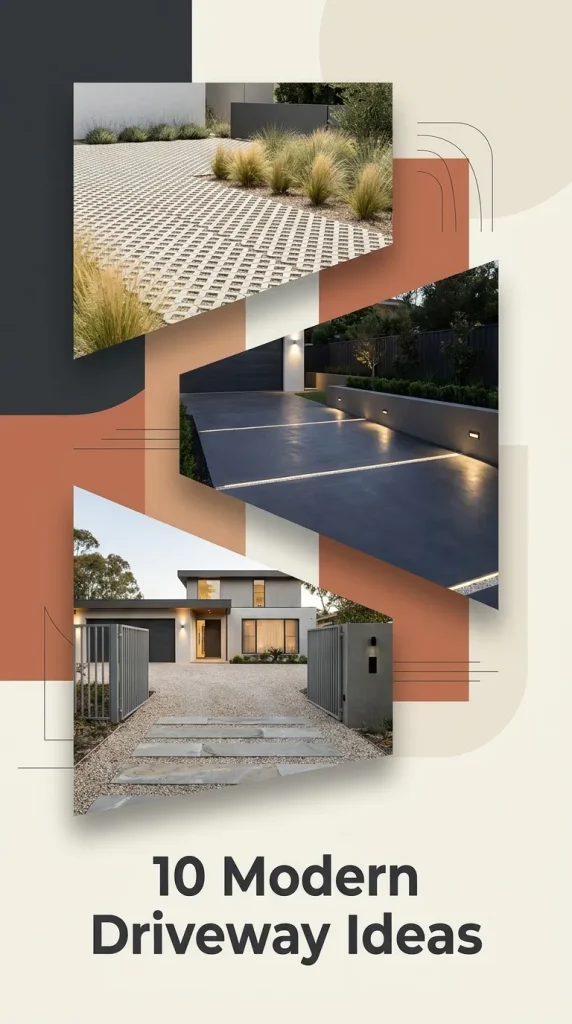
10 Modern Driveway Ideas

Your driveway is the first thing you—and your guests—see when arriving home. While often overlooked as a purely functional necessity, the driveway is a massive design opportunity that sets the tone for your entire property. In contemporary landscaping, the modern driveway has evolved into an architectural statement, blending seamless engineering with striking aesthetics. By moving away from standard, cracked concrete and toward thoughtful, multi-textured surfaces, you can dramatically increase your home’s curb appeal and even its market value.
Whether you are renovating an older property or finishing a new build, the right driveway can bridge the gap between your home’s architecture and the natural landscape. From sustainable permeable surfaces to high-end porcelain finishes, here are 10 modern driveway ideas to transform your arrival experience into something truly special.

1. Large-Format Concrete Pavers

The days of the singular, monolithic poured concrete slab are fading. Modern design favors large-format concrete pavers—often in 2×2 or 2×4 foot squares—laid in crisp, geometric patterns. The beauty of these large-format pavers lies in their structural simplicity. By leaving precise gaps between the slabs, you create a visual grid that feels deliberate and architectural. These gaps are not just for style; they serve as a drainage system, allowing water to permeate the ground. Filling the spaces with fine white gravel or dark slate chips creates a high-contrast, professional finish that feels remarkably clean and high-end.

How to Make

Begin by excavating a stable, compacted base of crushed stone to ensure the pavers never settle unevenly. Lay a sand bedding layer for precise leveling. Use heavy-duty, pre-cast concrete slabs that have been sealed to resist staining. Align them with military precision using string lines. Fill the deliberate joints between the pavers with your chosen decorative stone, and finish the edges with steel landscape edging for a sharp, refined border that keeps the stones contained and the lines perfectly straight.

Things Needed

  • Large-format pre-cast concrete slabs
  • Crushed stone for the sub-base
  • Leveling sand
  • Decorative gravel (white or slate)
  • Steel landscape edging

2. Permeable Gravel with Stabilization Grids

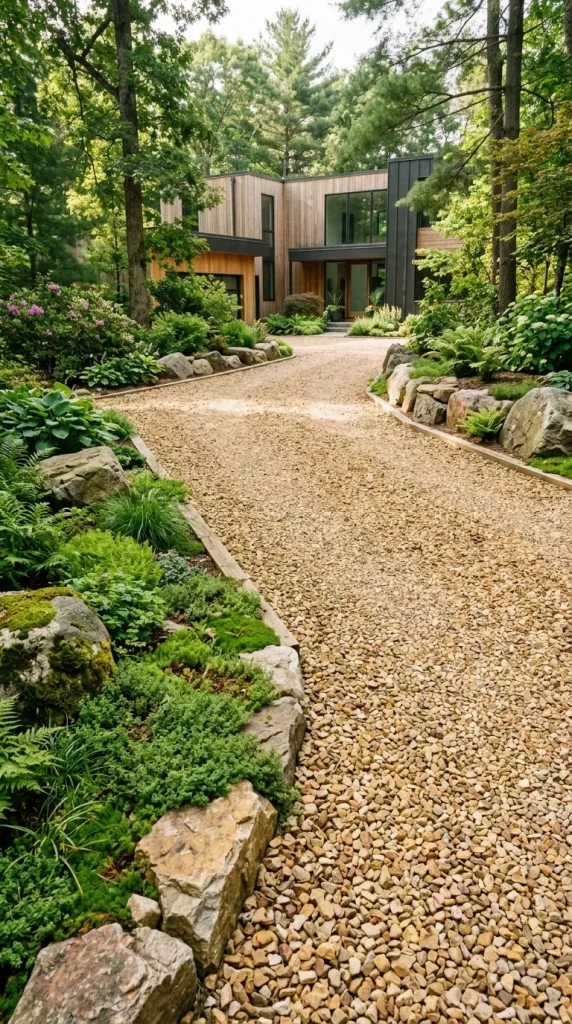
Gravel is a timeless choice, but it is often maligned for being messy or difficult to drive on. The modern solution is the stabilization grid—a honeycombed plastic or resin system that sits hidden beneath the stone. These grids hold the gravel in place, preventing ruts and movement while maintaining 100% permeability. This is the ultimate “natural-modern” driveway. It looks soft and organic, fits beautifully with both rustic and contemporary homes, and is an eco-friendly choice because it allows rainwater to return directly to the water table rather than running off into storm drains.

How to Make

After excavating, lay down a permeable geotextile fabric to prevent weed growth. Install a base of angular gravel, then lay the honeycomb stabilization grid sheets. Finally, spread your chosen decorative gravel over the top, using a rake to ensure the grid is completely hidden. The result is a rock-solid surface that acts like paved stone but retains the aesthetic warmth and crunch of classic gravel. It is essential to use angular, crushed stone rather than rounded “pea gravel,” as angular stones lock together better within the grid.

Things Needed

  • Geotextile weed-barrier fabric
  • Honeycomb stabilization grids
  • Angular crushed stone (1/4 to 3/8 inch)
  • Rake for distribution
  • Edge restraints to hold the grid

3. Integrated Grass Joints (The Ribbon Driveway)

The “ribbon” driveway is a sophisticated nod to mid-century modern design, utilizing two concrete tracks or rows of large pavers that allow a lush strip of greenery to grow right down the middle. This is an excellent way to soften the impact of hardscaping in your front yard. It makes the driveway feel like part of the garden rather than just a strip of pavement. For the greenery, select ultra-hardy, low-profile groundcovers like creeping thyme, clover, or mondo grass that can handle occasional foot or tire traffic while keeping your driveway looking vibrant.

How to Make

Pour two parallel concrete strips or lay two lines of pavers spaced exactly to the width of your car’s tires. In the center channel, install a high-quality soil mix enriched with organic matter. Choose a groundcover appropriate for your local climate and sunlight conditions. For a modern look, keep the grass clipped neatly and ensure the edges where the pavement meets the soil are clean and defined. This design requires a bit more maintenance than a solid surface, but the visual reward—a lush, green welcome—is well worth the effort.

Things Needed

  • Concrete or paver strips
  • Quality organic soil mix
  • Creeping thyme, clover, or mondo grass
  • Edging tools for maintenance
  • Irrigation (optional, for drier climates)

4. Mixed-Material Zoning

Modern landscaping is all about rhythm, and mixing materials is the best way to create it. You can define “zones”—such as a central parking area and a border for foot traffic—by switching materials. For example, a main field of smooth, grey resin-bound aggregate can be framed by a border of contrasting clay brick or basalt stone. This technique turns the driveway into a composed landscape feature. By using different materials, you can guide the eye toward your front door, making the entry feel more intentional and welcoming, and breaking up the monotony of a large, flat surface.

How to Make

Sketch your driveway layout and delineate the zones where material changes will occur. Install rigid edge restraints between these zones to keep materials from mixing. For the central field, choose a material like resin-bound stone, which is durable and seamless. For the borders, opt for a contrasting material like charcoal brick or limestone. Ensure the base layers for all materials are compacted to the same height so that the finished surfaces are perfectly flush, preventing tripping hazards and creating a smooth, professional aesthetic.

Things Needed

  • Material 1 (resin-bound stone or large slabs)
  • Material 2 (contrasting brick or stone)
  • Rigid edge restraints
  • Compaction equipment
  • Professional-grade landscape plans

5. Invisible Engineering

The trend in 2026 is “invisible engineering,” where you get the aesthetic charm of heritage materials—like cobblestone, wood, or natural shingle—without the maintenance or rutting problems associated with them. This is achieved by placing traditional-looking materials over a modern, high-tech sub-structure. This allows you to achieve a “cottage-core” or traditional vibe that is structuraly sound enough for heavy modern SUVs and delivery trucks. It’s the best of both worlds: the timeless look of the past paired with the rock-solid durability of modern civil engineering.

How to Make

This usually involves a base of reinforced concrete or a heavy-duty permeable asphalt layer. Once this base is set, the traditional materials are applied as a veneer or a finishing layer. For instance, using brick pavers in a herringbone pattern over a structural concrete slab gives you the look of old-world European streets with the load-bearing capacity of a modern highway. Professional installation is key here to ensure the materials are properly bonded to the base to prevent lifting or shifting over time.

Things Needed

  • Reinforced structural concrete or asphalt base
  • Traditional finishing materials (cobblestone, brick, etc.)
  • Bonding agents or structural mortar
  • Precision installation by a landscape contractor
  • Sealing products to protect the finish

6. Flush-Mounted LED Lighting

Lighting is the final piece of the modern driveway puzzle. Instead of using tall, distracting path lights that are easily damaged by cars, flush-mounted LED lights are installed directly into the driveway itself. These are typically recessed into the joints between pavers or installed along the outer edge. They provide a soft, glowing pathway that looks incredibly sophisticated at night. This is a subtle safety feature that transforms your driveway into a luxury arrival experience, guiding guests to your entrance while highlighting the crisp, clean lines of the hardscaping.

How to Make

Work with a landscape lighting professional to install a low-voltage, waterproof LED system. The conduits for the wiring must be buried beneath the driveway before the final surface is laid. The lights should be “walk-over” and “drive-over” rated, ensuring they can handle the weight of a vehicle. Space them at regular, rhythmic intervals to create a clean, consistent look. Choose a warm color temperature (around 2700K) for a soft, inviting glow rather than a harsh, industrial white.

Things Needed

  • Low-voltage LED driveway lights (drive-over rated)
  • Transformer and waterproof wiring
  • Trenching equipment for conduits
  • Precision drilling or paver spacing
  • Landscape lighting plan

7. Porcelain Slab Paving

Porcelain is a rising star in exterior design for good reason. It is virtually non-porous, meaning it is immune to the oil stains, mold, and weathering that plague concrete. Porcelain slabs look remarkably like natural stone or polished concrete but offer a consistent, fade-free color that stays looking brand new for years. This is the ultimate “low-maintenance luxury” driveway. It is perfectly suited for ultra-modern architecture, where you want a crisp, sharp surface that remains absolutely pristine regardless of how harsh the weather becomes.

How to Make

Ensure you purchase porcelain tiles that are specifically rated for “exterior” use and have an “R11” or higher slip-resistance rating. They must be installed on a perfectly leveled concrete base using a high-performance, exterior-grade adhesive. The joints between the tiles should be kept very narrow for a sleek, contemporary look. Because porcelain is very hard, you will need a diamond-blade saw for cutting. The result is a smooth, sophisticated surface that requires little more than an occasional wash with a hose.

Things Needed

  • R11-rated exterior porcelain slabs
  • Exterior-grade adhesive
  • Concrete base
  • Diamond-blade saw
  • Grout or joint filler for exterior use

8. Heated Driveway Systems

In climates where winter brings snow and ice, a heated driveway is the ultimate luxury upgrade. By installing a hydronic or electric heating system beneath your driveway surface, you can eliminate the need for shoveling, snowblowers, and harsh melting salts that can damage both your landscaping and your car. Your driveway will stay clear and dry all winter, looking polished and intentional in every season. It’s an invisible improvement that dramatically increases the daily usability and safety of your property, making it a high-return investment.

How to Make

This system must be installed before the final driveway surface is laid. A grid of heating cables (electric) or tubing (hydronic) is secured over the compacted base. The driveway material—whether concrete, pavers, or asphalt—is then laid over the top. The system can be automated to turn on when sensors detect moisture and cold temperatures. This is a highly technical project that requires both an electrician (or HVAC pro) and a landscape contractor, but the convenience of a snow-free driveway is truly unmatched.

Things Needed

  • Heating cables or hydronic tubing system
  • Snow/moisture sensors
  • Transformer or boiler system
  • Professional installation team
  • Final driveway surface material

9. Geometric Brick or Stone Borders

If you have an existing driveway or are planning a large, neutral-paved space, adding a geometric border is the fastest way to make it look “designed.” A frame of contrasting brick, basalt, or limestone creates a sharp, tailored edge that ties your driveway into the design of your home. It’s like a picture frame for your house. This simple, linear detail elevates even a basic concrete driveway into a cohesive design element. It shows that the driveway was a thoughtful part of your overall landscape plan, not just an afterthought.

How to Make

Decide on a border width—usually 4 to 8 inches—and use a contrasting color and texture to the main driveway surface. If the driveway is grey concrete, a border of dark charcoal brick or warm tan limestone provides excellent contrast. The border must be laid on a solid, independent sub-base to prevent it from separating from the driveway over time. Use a consistent pattern, such as a soldier course (bricks standing on their long side) or a running bond, to keep the look clean and intentional.

Things Needed

  • Contrasting bricks or natural stone
  • Independent sub-base material
  • Mortar or sand for setting
  • String lines for straight edges
  • Leveling equipment

10. Floating or Cantilevered Transitions

The transition where the driveway meets the garage or the front walk is an often-ignored space. Modern design seeks to make this transition seamless. Consider a “floating” threshold where the driveway material transitions into a different surface—like a smooth resin band or a row of polished stones—right before the house. This controlled transition slows the eye and guides it toward the front door. It creates a “landing zone” that feels refined and well-planned, effectively signaling to your guests that they have arrived at a thoughtful, high-end residence.

How to Make

Design the transition zone to be between 18 and 36 inches wide. Use a material that is visually distinct from the rest of the driveway. If your driveway is paver-based, switch to a smooth, poured resin finish for this section. If the driveway is concrete, add a “band” of polished stone at the threshold. The transition should be flush and level to ensure it is comfortable for walking. This little detail creates a “red carpet” arrival feel that is deeply professional and sets the stage for the rest of your home’s design.

Things Needed

  • Transition material (resin, polished stone)
  • Precision layout and design planning
  • Leveling materials
  • Professional finishing tools
  • Edge restraints for the transition zone

Conclusion

Modern driveway design is no longer just about utility; it is about architecture. By choosing materials like large-format concrete, integrating subtle LED lighting, or creating natural, permeable surfaces, you turn an everyday necessity into an intentional, high-end part of your home’s curb appeal. As you evaluate these options, think about which materials reflect the architecture of your house and which will best serve your local climate and daily habits. Whether you choose the structural crispness of porcelain or the organic, welcoming feel of a ribbon driveway, these modern touches will ensure that every arrival home feels special, polished, and beautifully designed.

Leave a Reply

Your email address will not be published. Required fields are marked *