10. Floating or Cantilevered Transitions
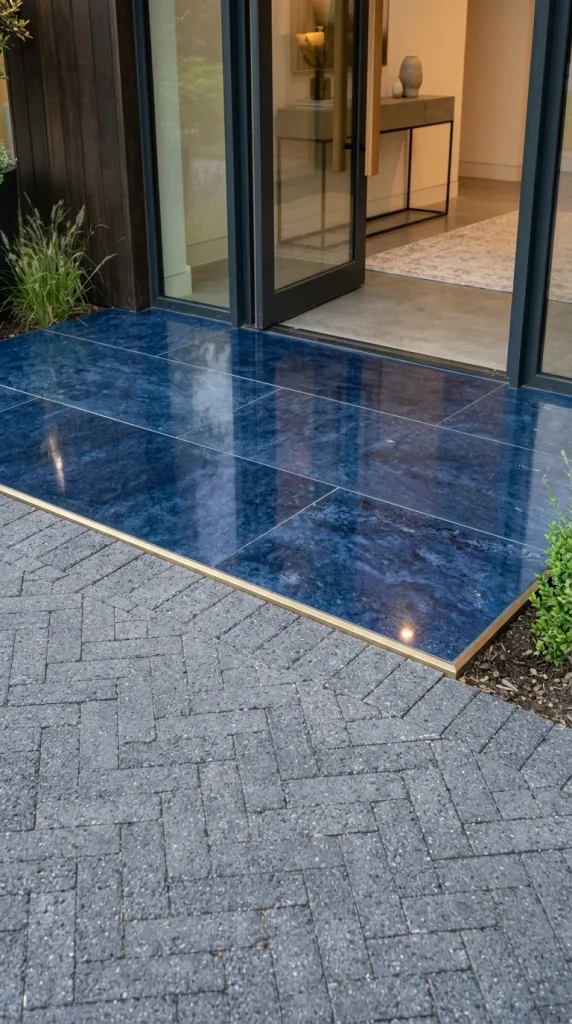
The transition where the driveway meets the garage or the front walk is an often-ignored space. Modern design seeks to make this transition seamless. Consider a “floating” threshold where the driveway material transitions into a different surface—like a smooth resin band or a row of polished stones—right before the house. This controlled transition slows the eye and guides it toward the front door. It creates a “landing zone” that feels refined and well-planned, effectively signaling to your guests that they have arrived at a thoughtful, high-end residence.
How to Make
Design the transition zone to be between 18 and 36 inches wide. Use a material that is visually distinct from the rest of the driveway. If your driveway is paver-based, switch to a smooth, poured resin finish for this section. If the driveway is concrete, add a “band” of polished stone at the threshold. The transition should be flush and level to ensure it is comfortable for walking. This little detail creates a “red carpet” arrival feel that is deeply professional and sets the stage for the rest of your home’s design.
Things Needed
- Transition material (resin, polished stone)
- Precision layout and design planning
- Leveling materials
- Professional finishing tools
- Edge restraints for the transition zone
Conclusion
Modern driveway design is no longer just about utility; it is about architecture. By choosing materials like large-format concrete, integrating subtle LED lighting, or creating natural, permeable surfaces, you turn an everyday necessity into an intentional, high-end part of your home’s curb appeal. As you evaluate these options, think about which materials reflect the architecture of your house and which will best serve your local climate and daily habits. Whether you choose the structural crispness of porcelain or the organic, welcoming feel of a ribbon driveway, these modern touches will ensure that every arrival home feels special, polished, and beautifully designed.